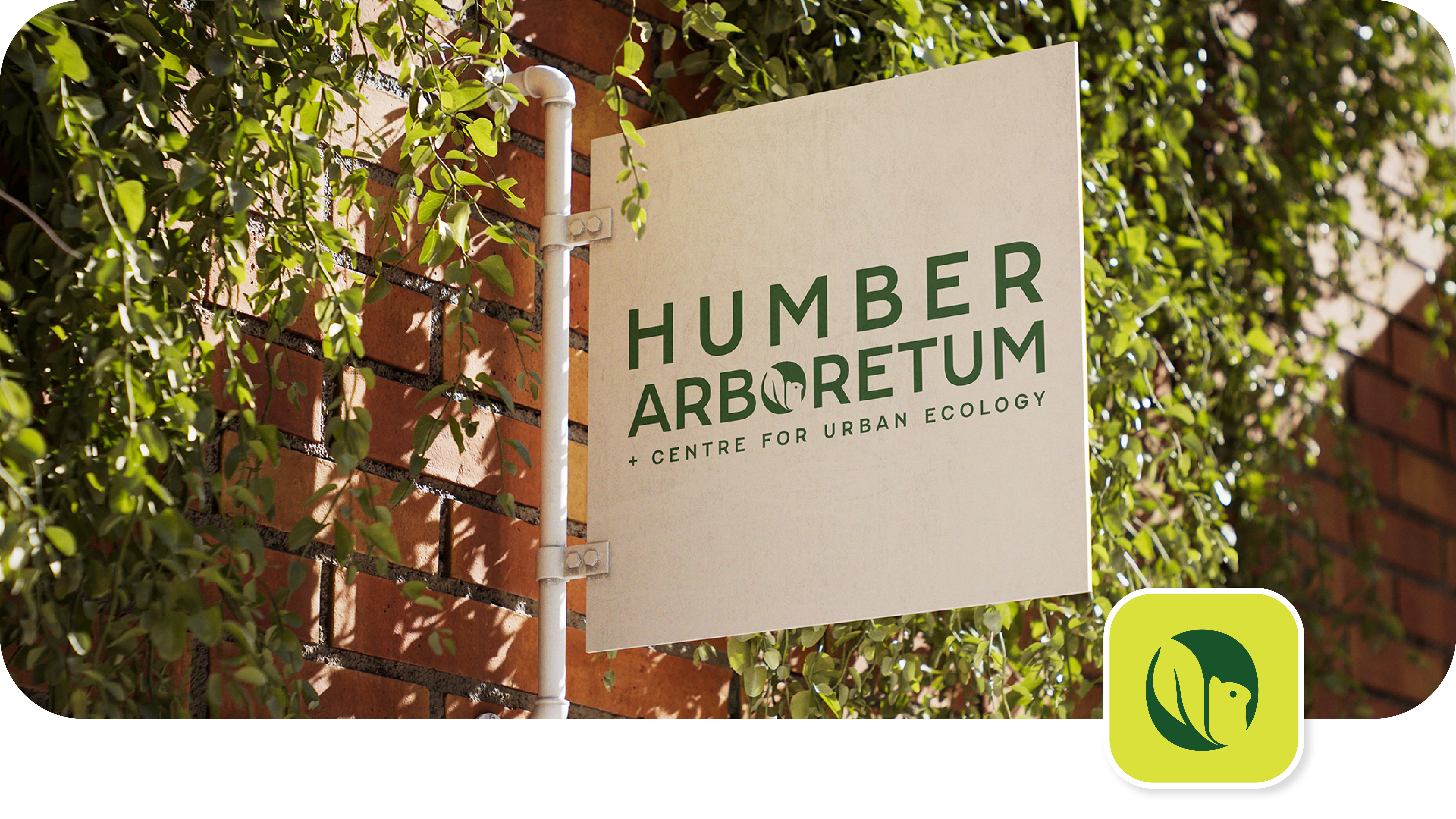
Humber Arboretum Signage System
I redesigned the signage system for the Humber Arboretum with a focus on accessibility, clarity, and kid‑friendly engagement. The purpose of this project is to create an inclusive, educational, and visually inviting system that empowers young users with mobility disabilities to explore nature confidently and safely.
Role
UX & Information Designer
Scope
Environmental & Wayfinding Designer, Information Architect, Accessibility Lead
Tools
Illustrator
Problem
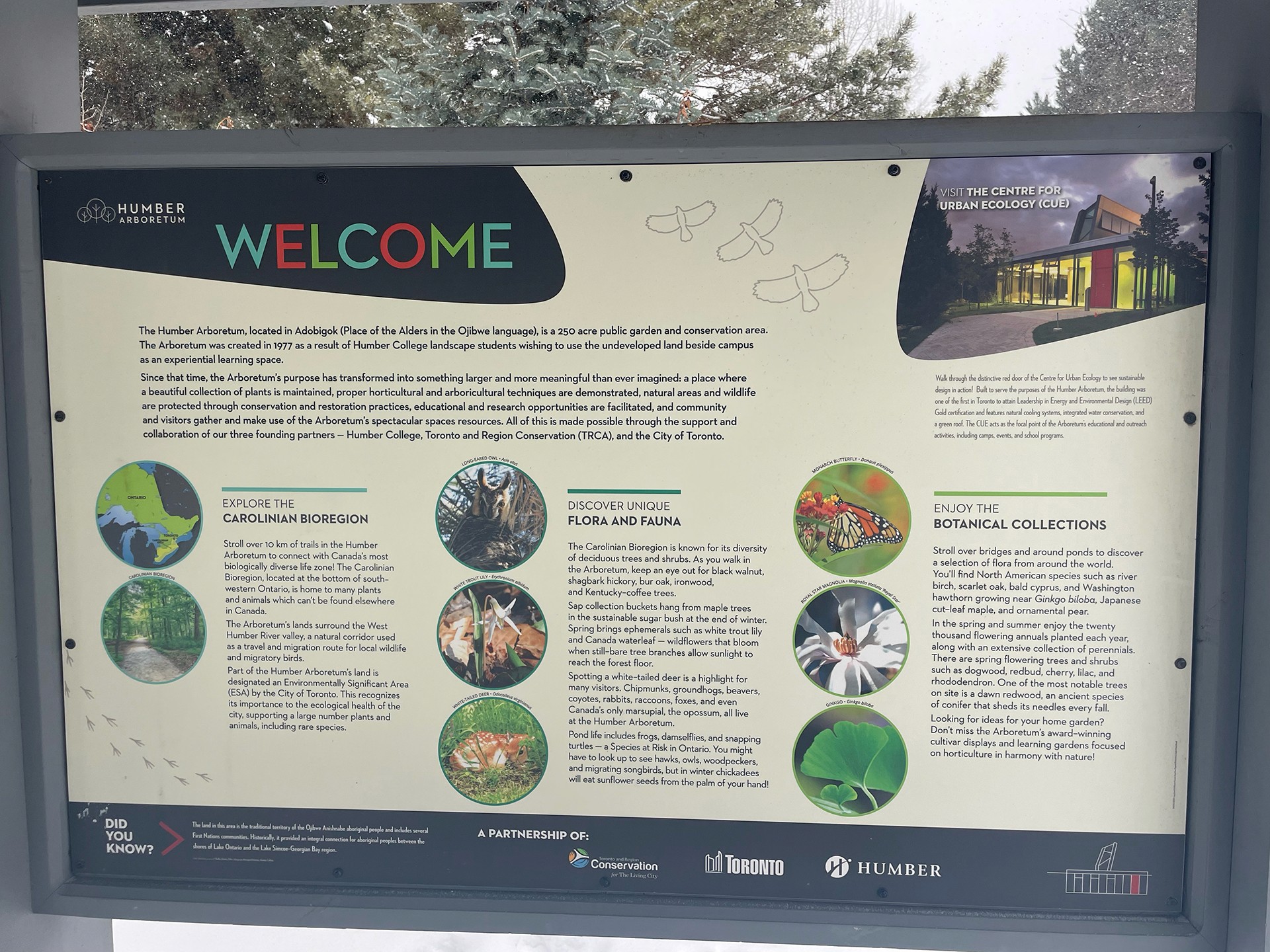
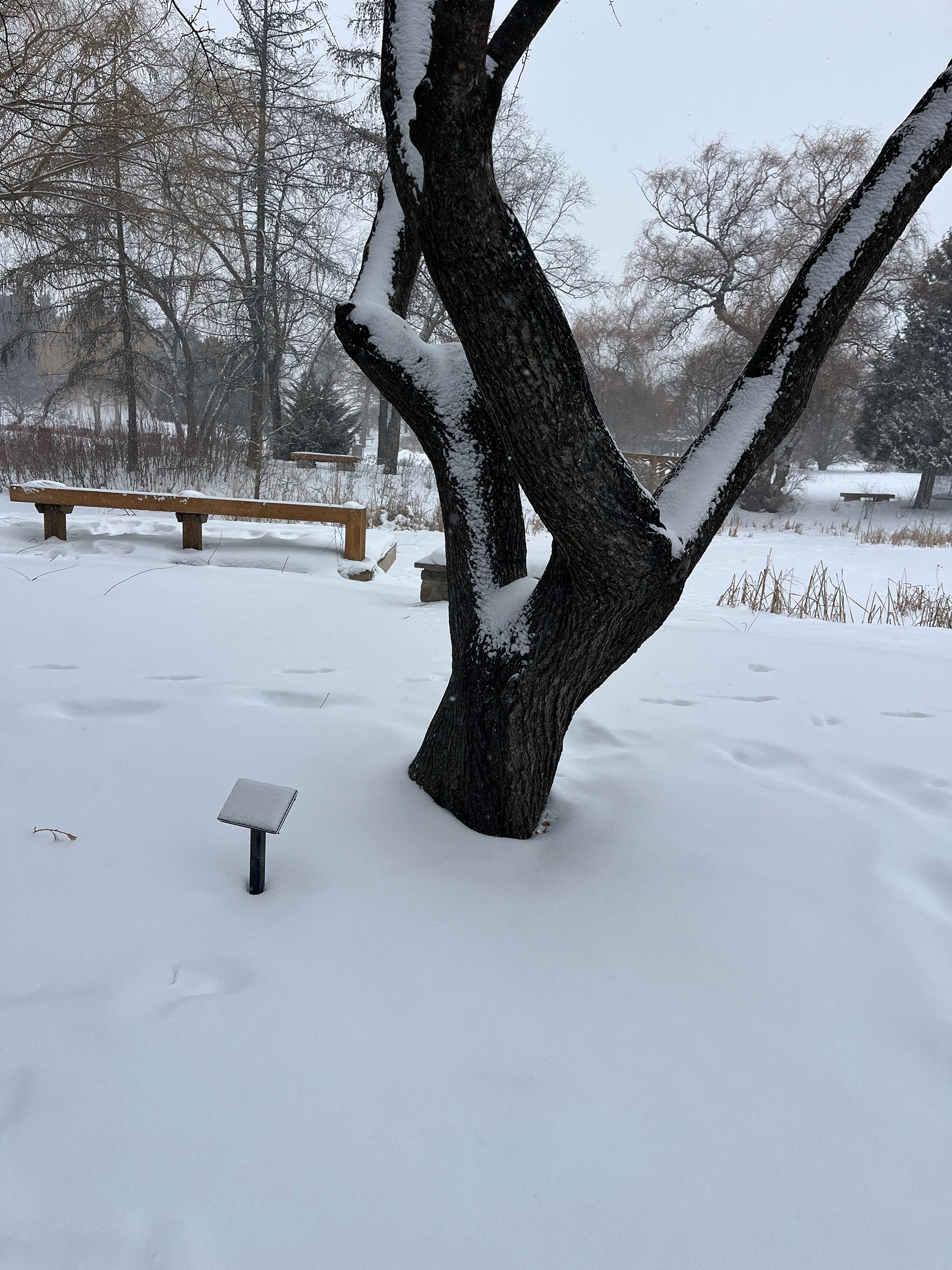
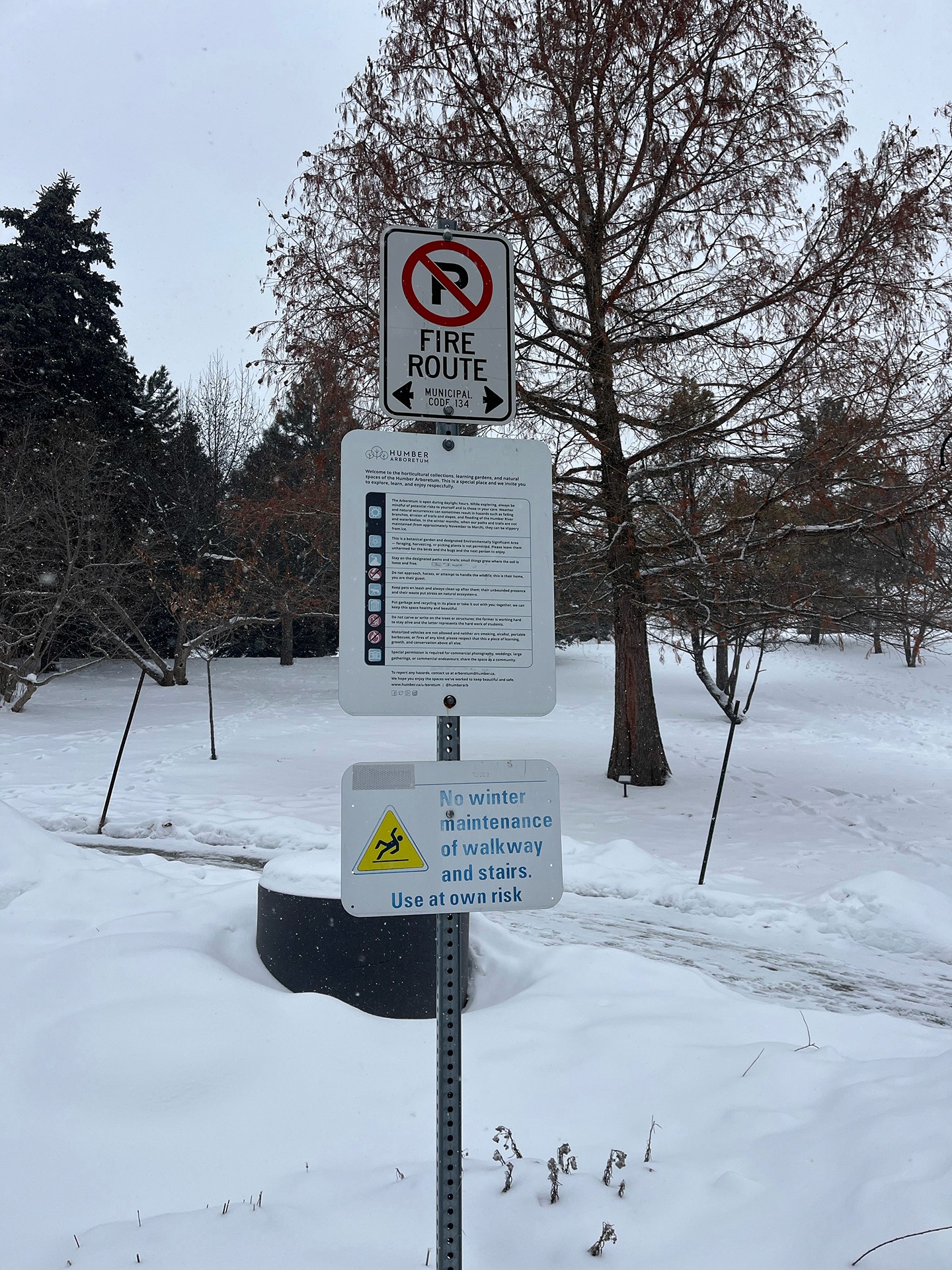
The Humber Arboretum has regular visits by children from local daycares and summer camps, but its current signage system does not make it clear which trails and areas are accessible for young visitors with mobility impairments.
Key Issues of the Current Signage System
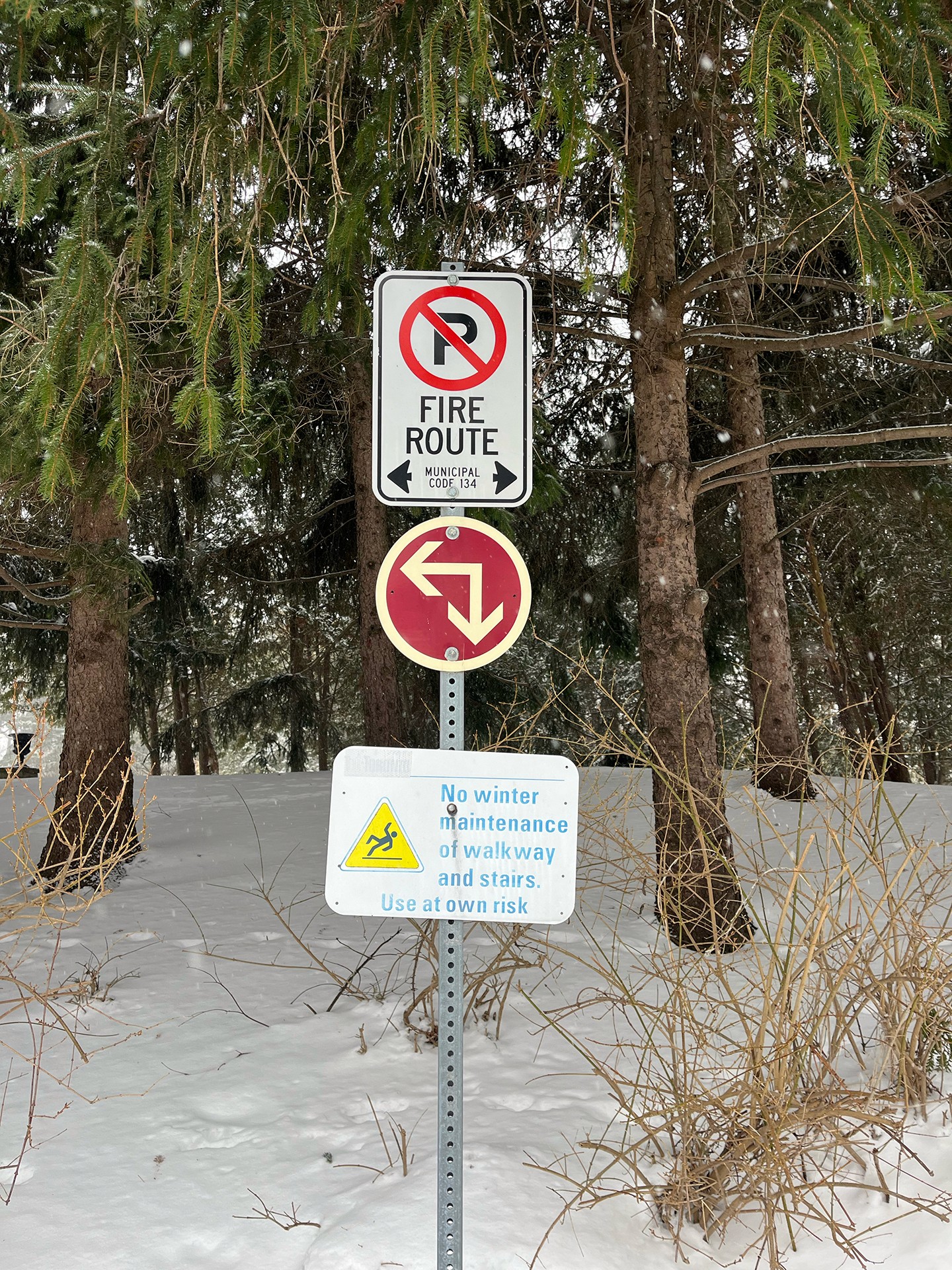
Limited signage - No cues as to where accessible trails and ramps are.
Exclusion - Lack of accessibility awareness makes it almost impossible for kids with physical impairments to participate in activities in the arboretum.
Inconsistent design - Signage needs to be predictable in order for people to recognize and prepare themselves for what's ahead.
Lacking visually - The designs were not created with children in mind and lack visual engagement and interactivity.
Solution
A clear and consistent signage system was created that allows my target audience to not only explore safely but learn and engage with the content being displayed.
Rebrand
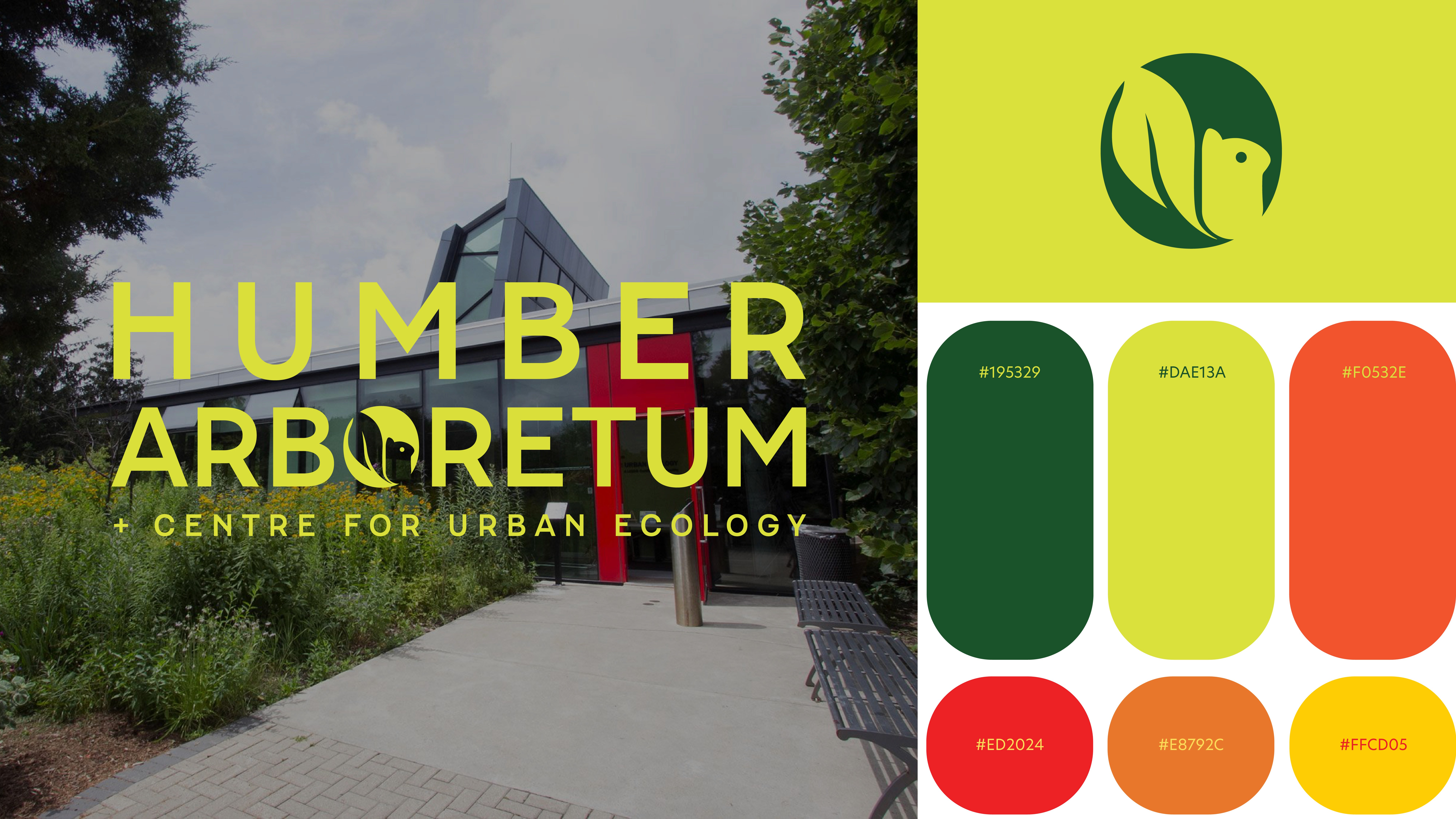
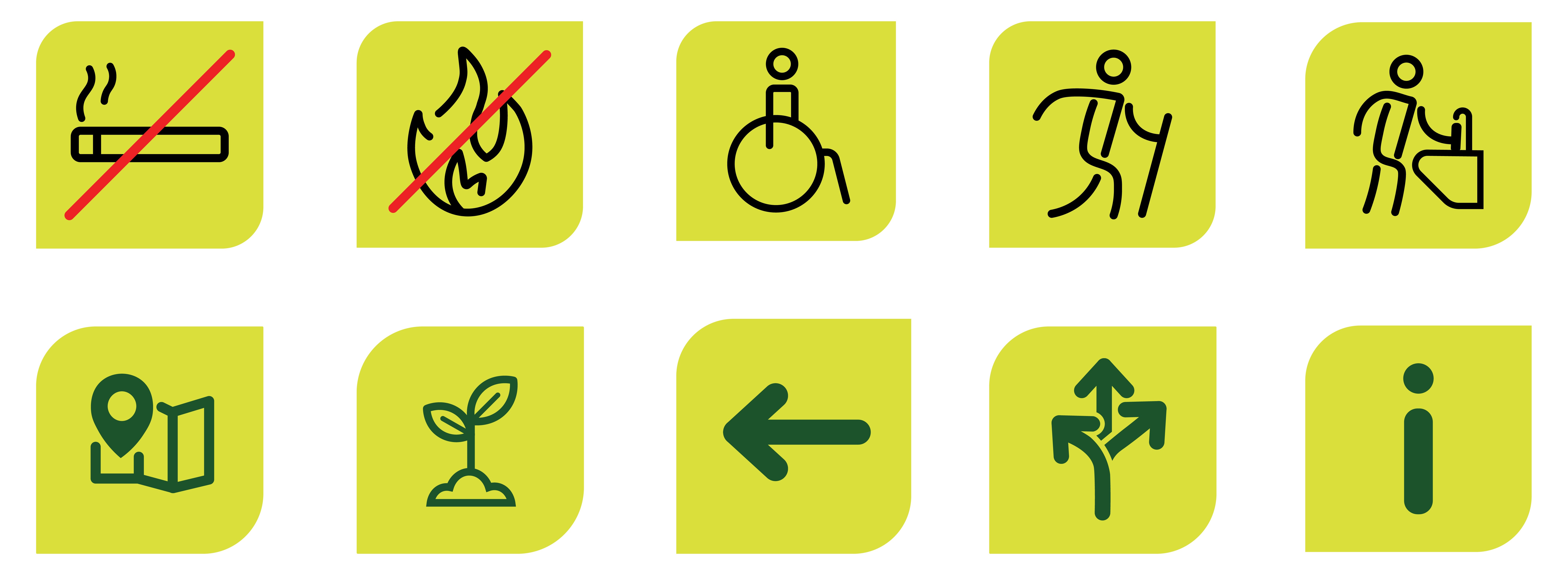
A new logo, colour palette, and iconography were created to ensure every aspect of the Humber Arboretum brand not only fit but also attracted my identified target audience. A mascot named "Leafy the Squirrel" was created, which encompasses both plant and animal aspects of the arboretum in order to bridge the two directly within the logo. The new colour palette was designed with bright colours that would stand out but could also be found in the arboretum environment. This ensures it adds to the space instead of distracting and taking away from the natural environment.

Signage System
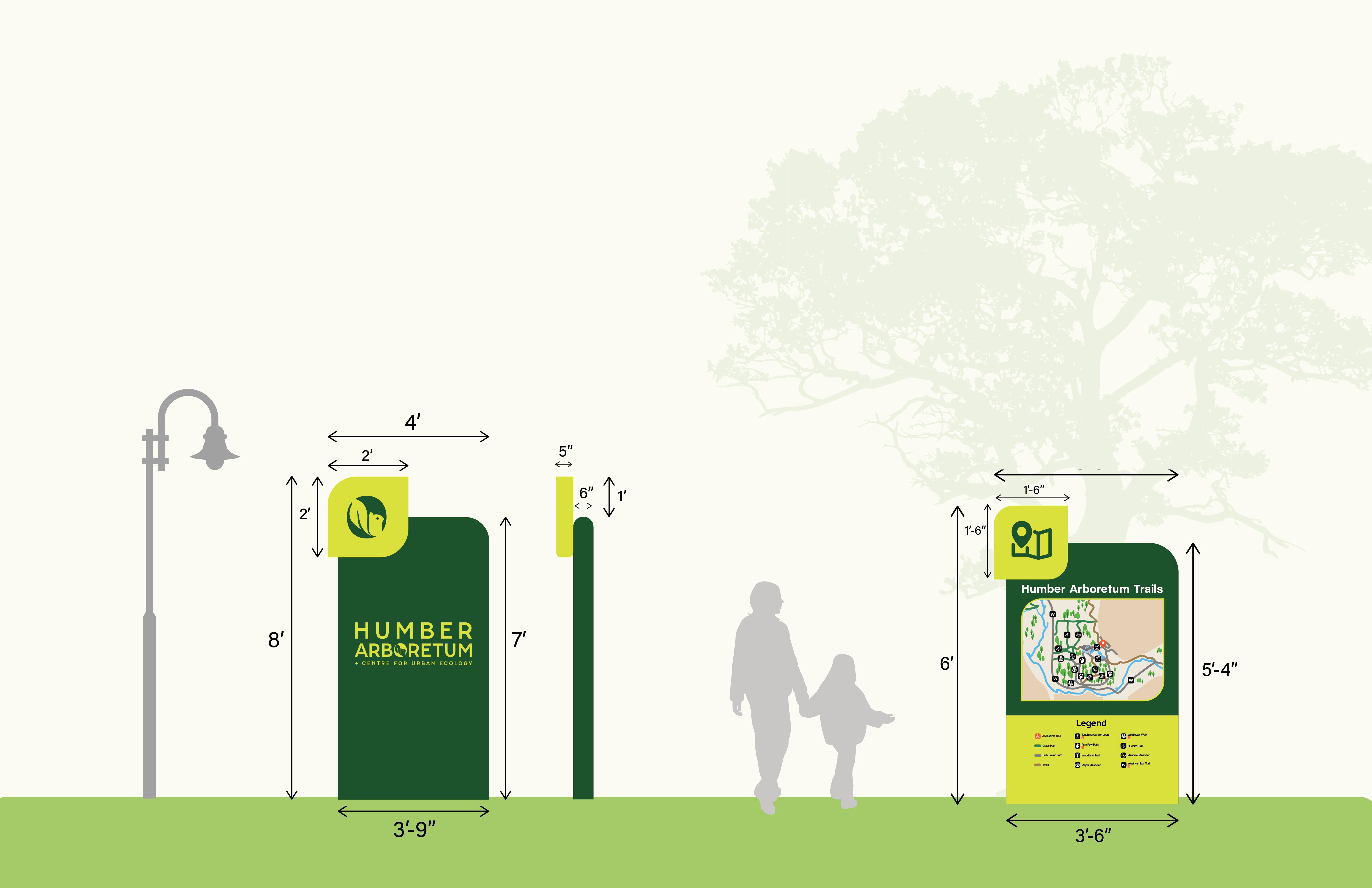
Bright colours were utilized throughout the entire system to ensure they stand out within the environment. Signage indicators are placed in the same location for easy recognizability. The entire system is built on a smaller scale, but this was intentional in order to accommodate the chosen target audience, as it is more difficult for them to read by struggling to look up than for a taller individual to simply look down. Everything was built in a 0.5 in. = 1 ft scale.
Entryway & Trail Signage
The park entryway sign is the largest within the system, as it has to be viewed from far distances while also serving as a landmark for the entire arboretum. Throughout the entire system, the icons utilized in the hiking trail map stay consistent in shape, size, and colour to emphasize consistency and allow easy recognizability.
Visitors Sign & Information Kiosk
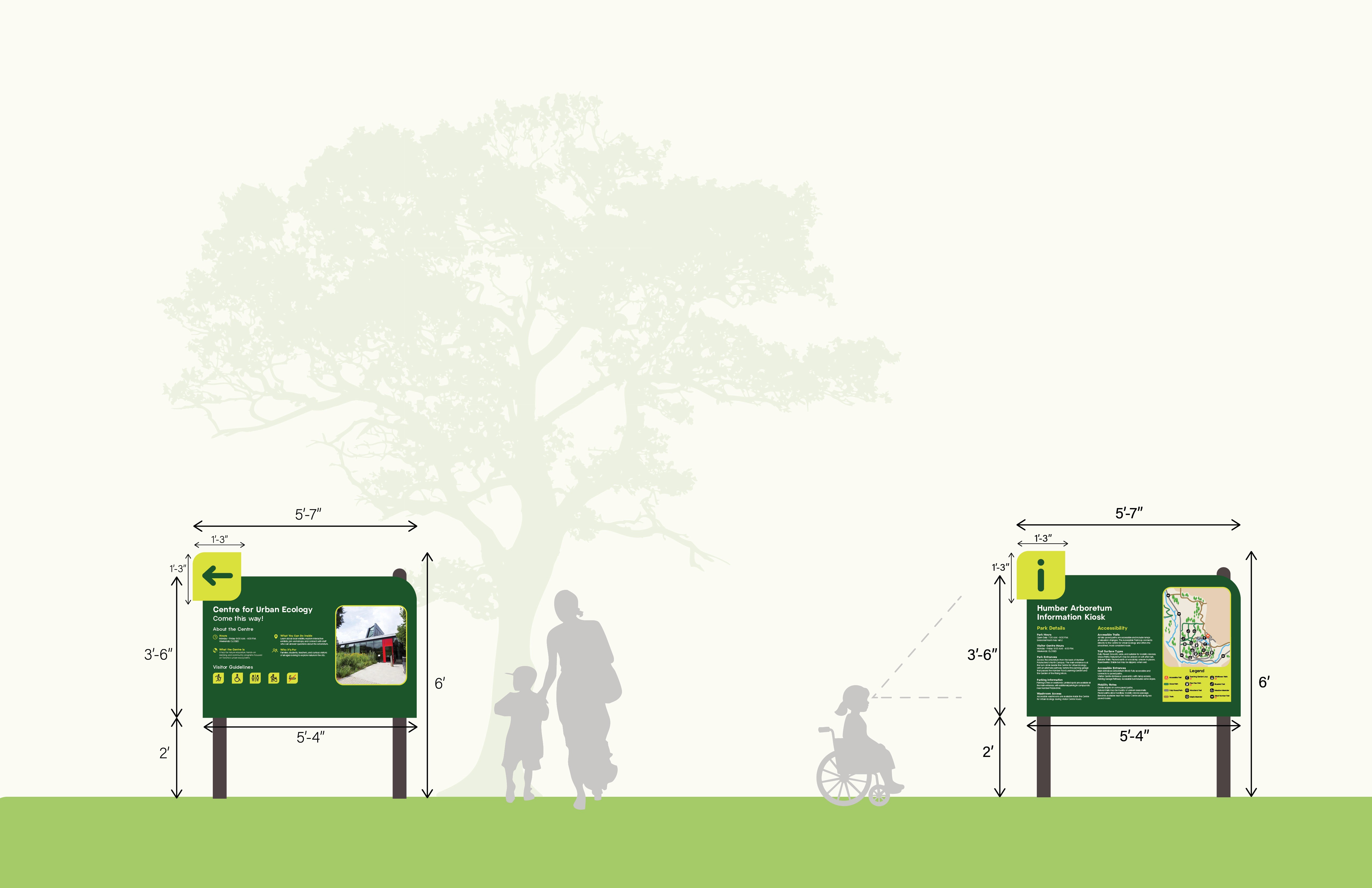
For the visitors' center sign, I included information about what the center is, what users can do inside, and who it's for. This may encourage people to engage with the space more if they know what is offered. A realistic photo of what the building looks like was also included to help familiarize children with the space and encourage them to learn where main locations are, which is especially important since the center is sometimes used as a meeting spot for camps. For the information kiosk and across all signs that feature a map, I designed a specific icon for each trail, as it's easier for children to recognize and correlate imagery with trail names. Information-wise, I included accessibility-specific details to help familiarize users with accessible trail types.
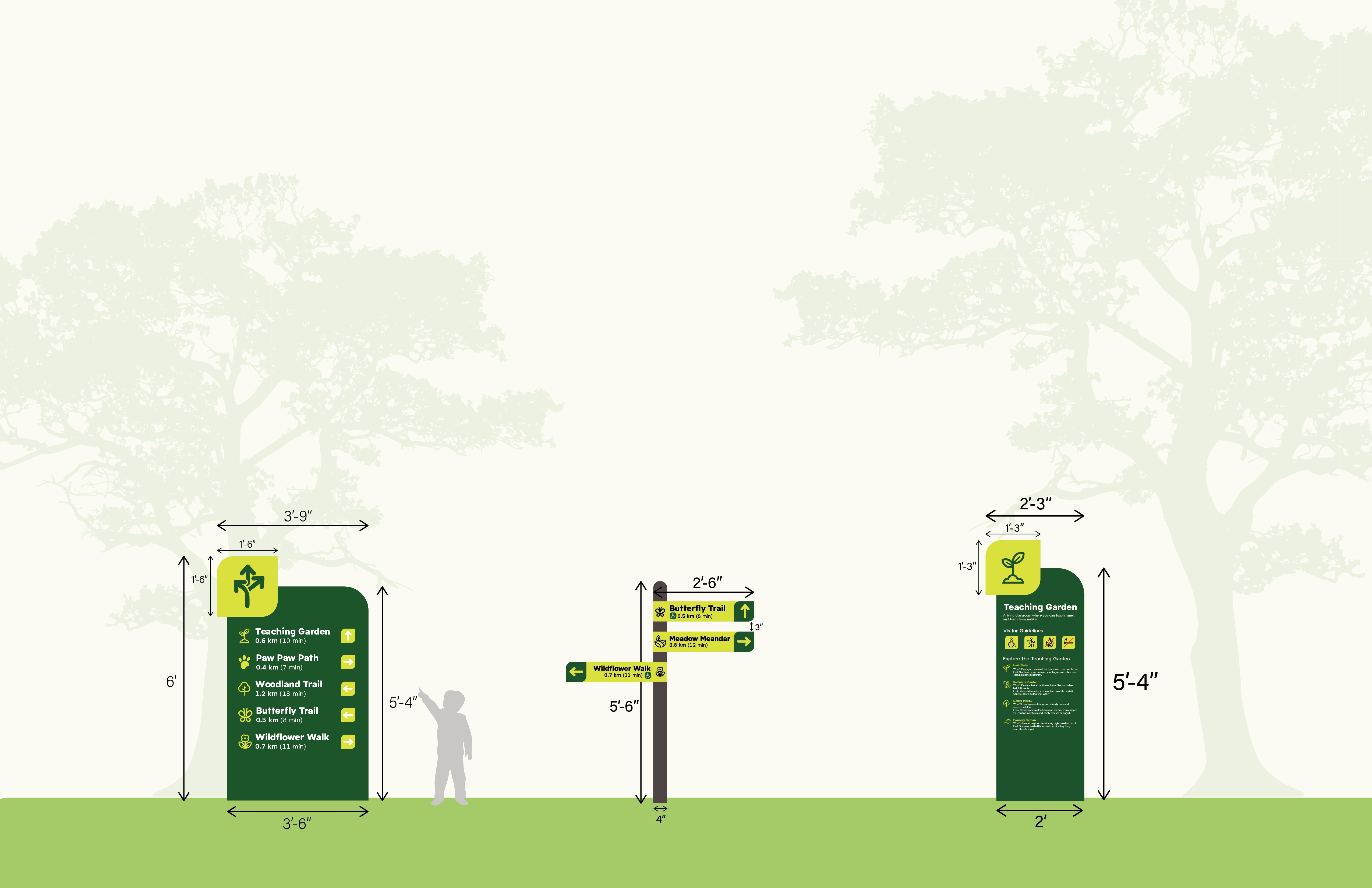
Large/ Small Directional & Identification Signage
For the directional signs, the length and time of the trail are included to provide children with the opportunity to learn time in relation to distance. The identification sign features exploration prompts to increase interactivity within the arboretum. These prompts not only teach kids but also provide a safe, hands-on experience while accommodating various learning styles.
Warning Signs
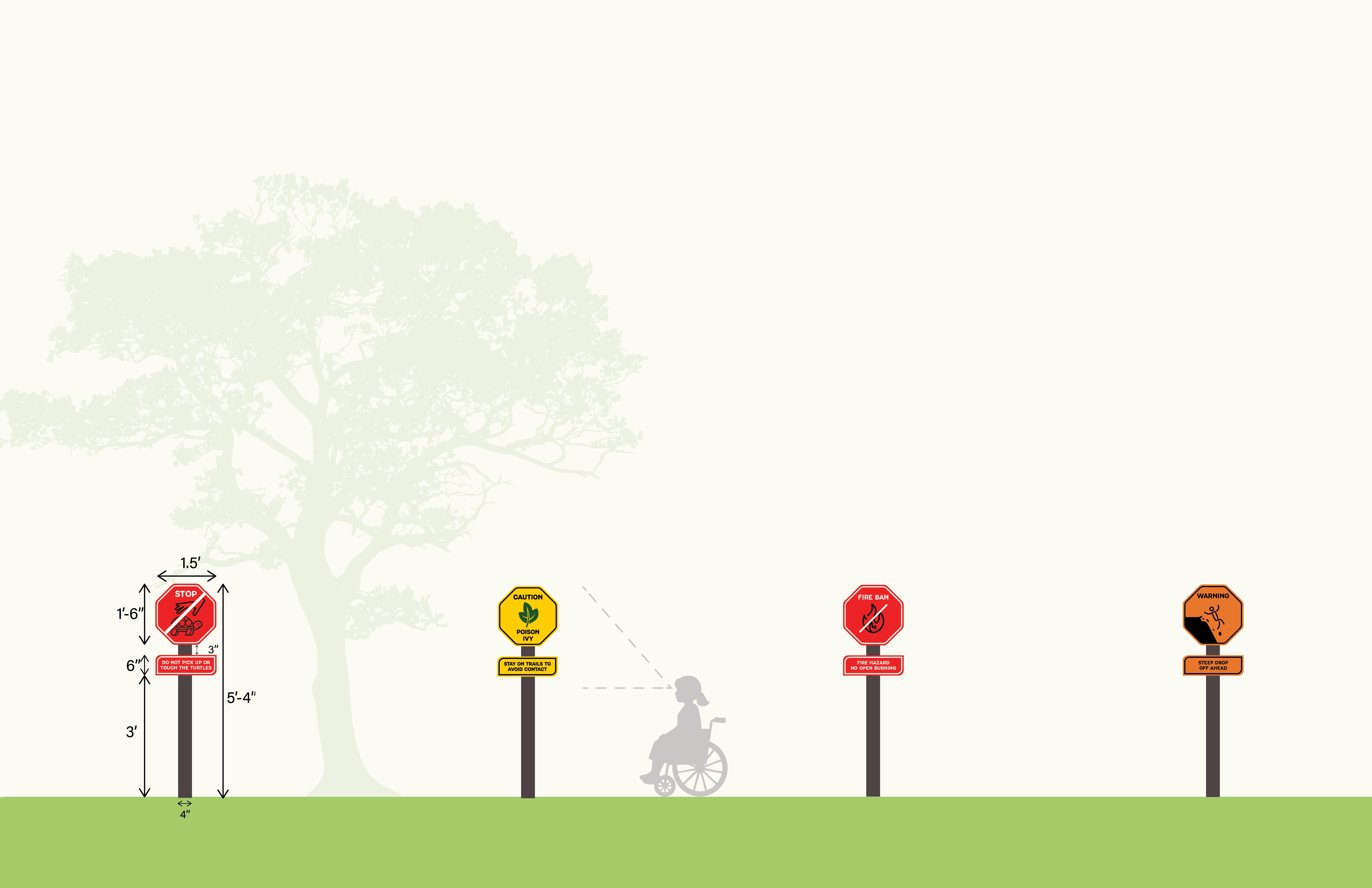
I created a consistent warning signage system that changes in colour to emphasize the severity level. Every sign was designed to be in the shape of a stop sign since this is a basic shape that children recognize as an alert.
Interpretive Signage
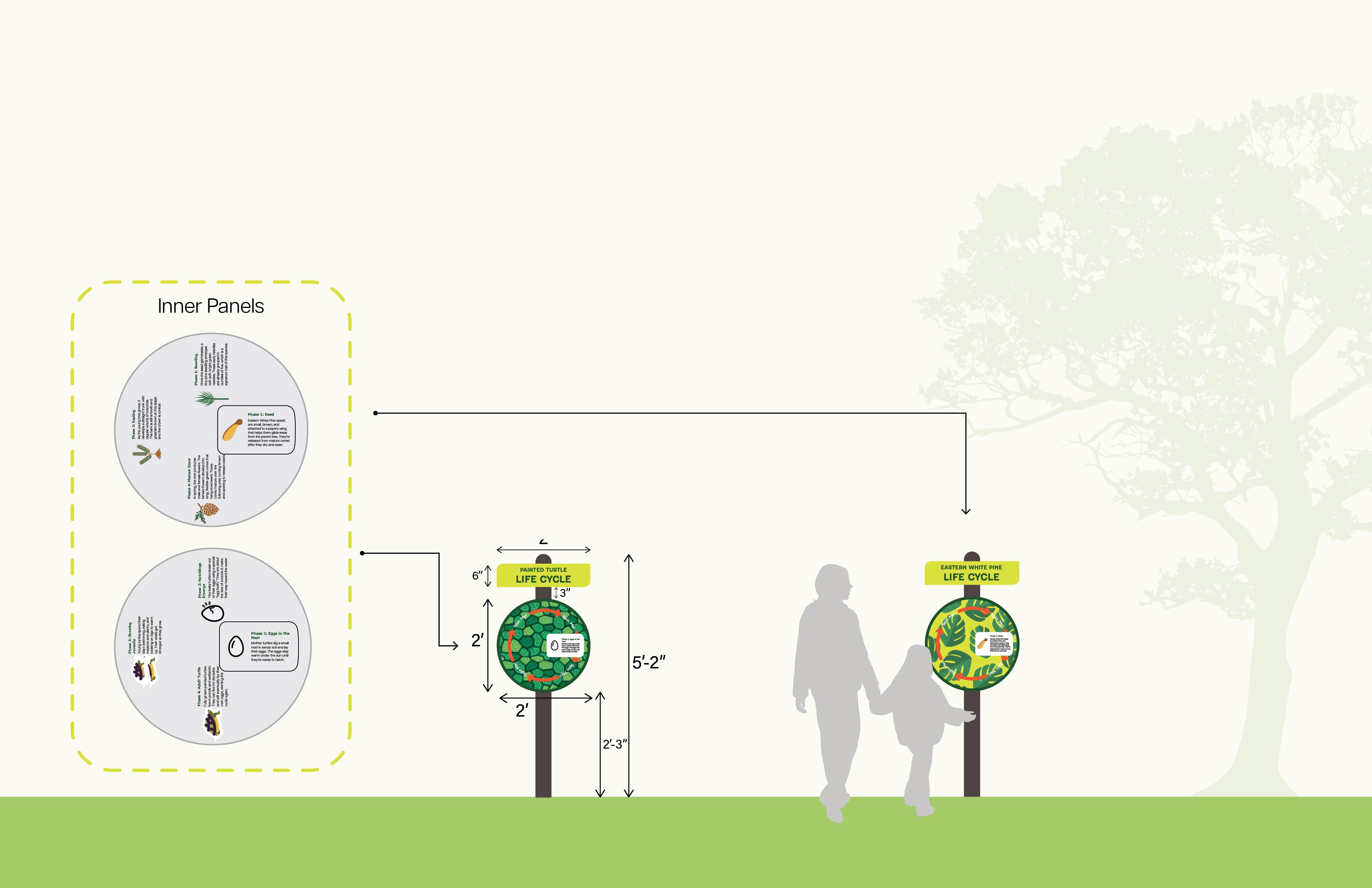
The interpretive signage promotes interactive learning through "reveal to learn more" signs. This system uses an internal panel that features 4 phases of a life cycle. Children are encouraged to spin the circular sign to learn more about each phase. This creates an exciting and hands-on way to learn about various species native to the space and can easily be replaced to accommodate seasonal species since it utilizes an additional piece.